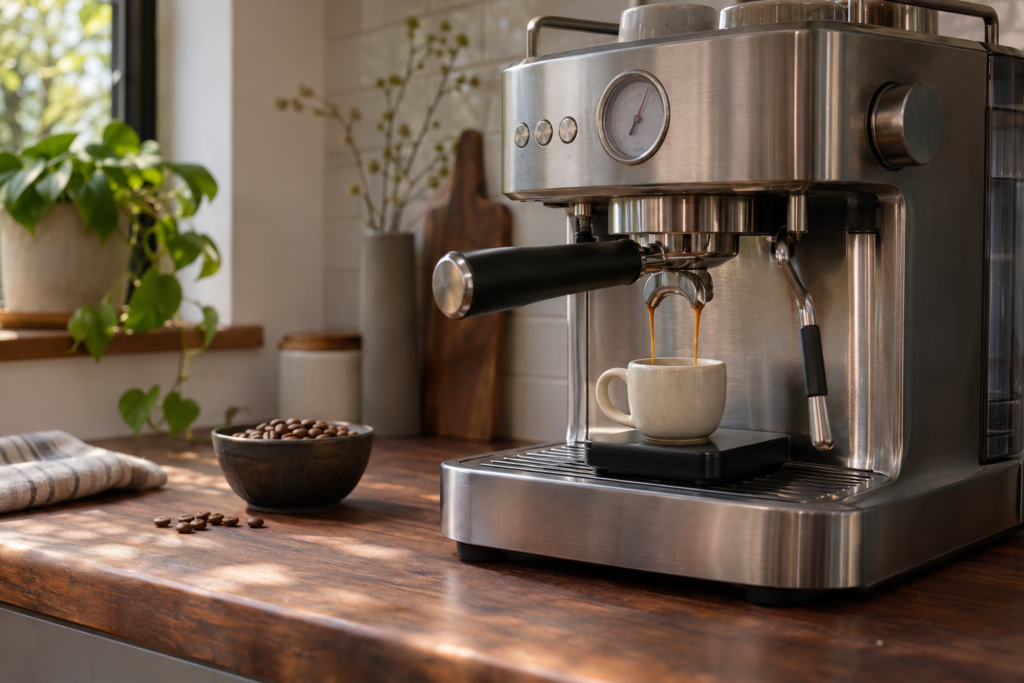
A home barista who plans to buy coffee beans can narrow the choice by thinking about how the coffee will be served, whether that is straight, topped with hot water or paired with milk. A small bag makes it easier to decide whether a roast suits the morning routine before committing to a larger order. Someone setting up a rocket espresso machine can use the first bag to establish a recipe, then refine the grind and the amount of espresso in the cup. Changing one of those details at a time makes it easier to tell what improved the flavour.
Choose Beans for the Coffee That Gets Made Most Often
For a household that mostly makes flat whites, a roast with chocolate, caramel or nut notes can be a practical starting point. Those flavours can stay recognisable when the espresso is mixed with milk. Someone who usually drinks espresso on its own might prefer a lighter, fruitier coffee or a medium roast with more sweetness and body. Tasting notes offer a guide to the character of the coffee, and a straight shot followed by a small milk drink can show how differently the same beans come across.
Fresh beans are easier to compare when each bag is labelled with its roast date and opened in turn. Keeping two or three bags open at once can make it harder to remember which grind setting worked for each coffee. A household that drinks one or two cups a day may find smaller bags easier to work through, especially when trying different roasts. Saving the label or taking a photo of it also helps when a blend turns out to be worth ordering again.
Start With a Recipe That Can Be Repeated
A consistent recipe gives the barista a way to work out why one shot tastes better than the next. Using a scale makes it possible to weigh both the dry grounds in the basket and the espresso in the cup. For a basket designed to take around 18 grams, a suitable starting point is 18 grams of ground coffee and 36 grams of espresso. The recipe can then be adjusted to suit the basket, the beans and the drink.
Keeping the dose steady makes grind changes easier to judge. If the shot reaches the target weight quickly and tastes thin or sharply sour, a slightly finer grind is worth trying. If it barely flows and tastes harsh or drying, a slightly coarser setting is a sensible next test. The comparison is clearest when the grounds are distributed evenly before tamping and the next shot is stopped at the same weight. Recording the dose, cup weight and a short tasting note is often enough to recreate a good result the following morning.
Taste the Espresso in the Finished Drink
A shot that tastes balanced on its own can get lost in a large mug of steamed milk. Before changing the grind again, it helps to make the same espresso in a smaller cup. Using less milk may bring back the coffee flavour the barista was looking for. If the drink still tastes weak, the next comparison could be a slightly shorter shot using the same dose, or a roast with a fuller flavour when the current bag runs out.
The same approach works for a long black. Tasting a sip of espresso before adding it to hot water tells the barista what is coming from the shot itself. If the espresso tastes good but the long black seems watery, reducing the amount of water is the simplest test. Fresh beans, a consistent recipe and small grind adjustments help home baristas make espresso that tastes balanced on its own or with steamed milk. Once a recipe works in the cup the household reaches for every day, it provides a reliable starting point for the next bag.